The wheel, invented in prehistoric times, remains fundamental to modern civilization. From transportation to industrial machinery, from turbines generating electricity to the gears in your smartphone, the wheel persists not because we lack innovation, but because it solves a fundamental problem elegantly and adapts infinitely.
We are witnessing the emergence of another foundational technology: artificial intelligence. But unlike the wheel, AI is not merely physical infrastructure—it is cognitive infrastructure that will shape how we think, decide, govern, and organize societies.
The question is no longer whether AI will transform our world. It will. The question is: who gets to steer?
The Infrastructure Imperative
When we call AI “foundational infrastructure,” we mean something specific: like electricity, roads, or the internet, AI will become embedded in the basic functioning of societies. It will be invisible, ubiquitous, and essential.
But here’s what makes this moment critical: foundational infrastructure doesn’t just enable activity—it shapes what’s possible and who benefits.
Consider: Who built the internet’s core protocols? Who controls global telecommunications networks? Who owns the cloud infrastructure underlying digital economies? These weren’t neutral technical choices—they were governance decisions that determined wealth distribution, power dynamics, and developmental trajectories for decades.
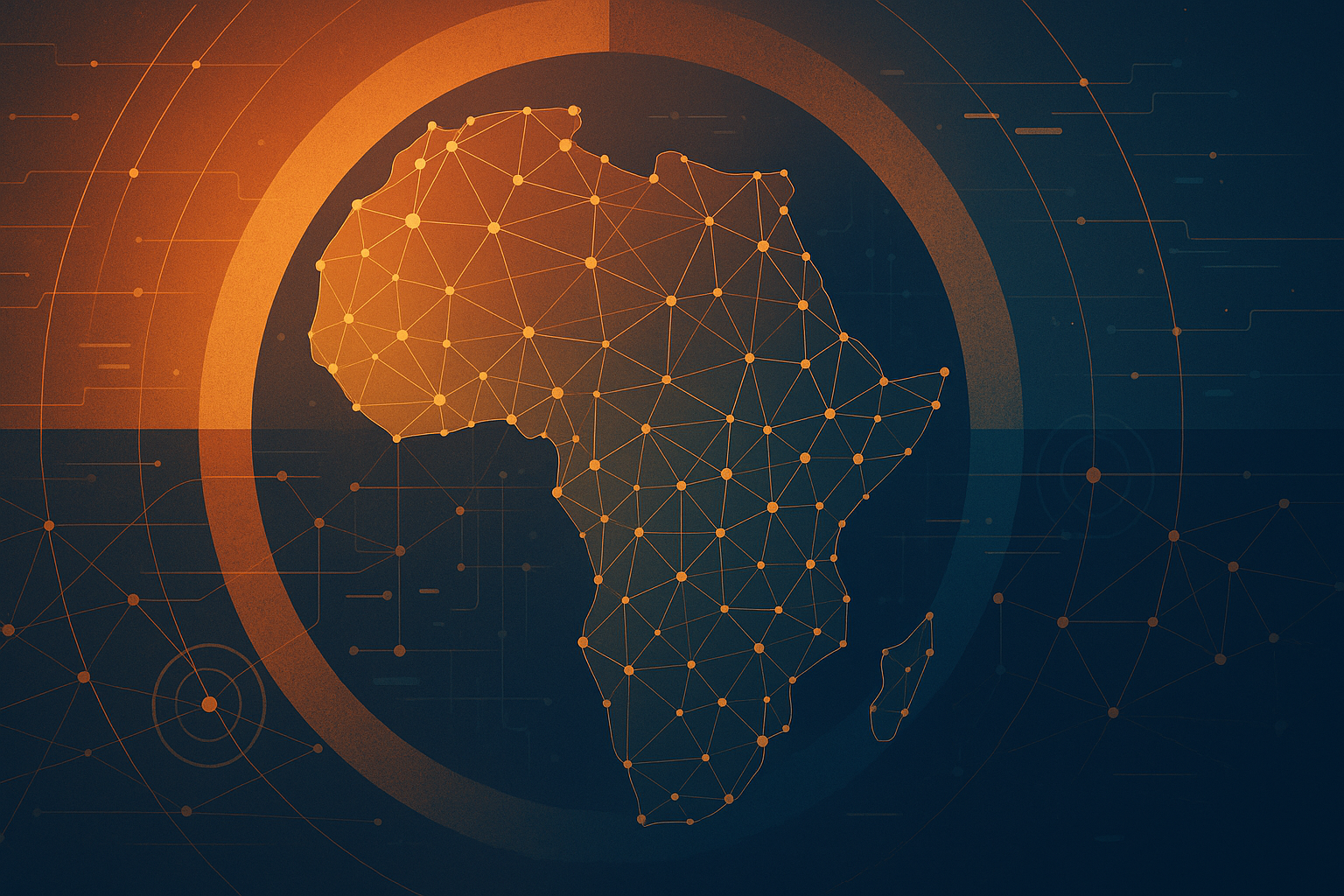
AI is following the same pattern, but faster and with deeper consequences. And right now, the architecture is being built primarily in Silicon Valley and Beijing, optimized for contexts radically different from African realities.
The Governance Challenge: Beyond Control
The instinctive response to powerful technology is control: regulation, standards, oversight. These matter. But they’re insufficient for AI, because AI development doesn’t behave like traditional infrastructure projects.
AI evolves as a complex adaptive system—a distributed, rapidly changing ecosystem of models, applications, data
flows, and human interactions. Trying to govern it through
centralized, top-down regulation alone is like trying to manage a
rainforest by controlling individual trees. You’ll always be behind,
addressing yesterday’s risks while tomorrow’s emerge unpredicted.
This is where insights from complexity science become essential.
John Holland, the pioneering researcher at the Santa Fe Institute,
studied how complex “good” outcomes emerge not from master plans, but
from simple rules interacting in feedback-rich
environments.
Elinor Ostrom won the Nobel Prize demonstrating that communities
successfully govern commons—shared resources prone to
exploitation—not through centralized control, but through
polycentric governance: nested, overlapping systems
where rules emerge from local contexts and adapt based on
outcomes.
What This Means for Africa
Africa has particular reasons to embrace emergent, polycentric
approaches to AI governance:
First, imposed solutions have historically
failed. Development interventions designed in Brussels or
Washington rarely account for local complexities. African innovation
succeeds when it emerges from context—mobile money wasn’t invented in
Silicon Valley; it solved African problems through African
ingenuity.
Second, Africa’s diversity demands adaptive
systems. There is no monolithic “African AI strategy” that
fits Lagos, Nairobi, Kigali, and Cape Town equally. Rules must emerge
from local conditions while connecting through shared
principles.
Third, centralized control concentrates power. If
AI governance is designed entirely by governments or foreign
corporations, African communities become subjects of systems designed
elsewhere. Emergent, polycentric governance distributes agency.
Fourth, Africa has experience with adaptive, informal
systems. From traditional governance structures to
contemporary informal economies, African societies have long
organized through emergent rather than imposed order. This is an
asset, not a deficit.
So the stakes are clear: AI will be foundational, and who
governs it matters profoundly. But here’s the hard part—how do we
actually design governance that works?
That’s what we’ll tackle in Part 2.
AgenticPPA is a pan-African initiative creating agentic AI
systems that serve African development priorities through
participatory governance and local capacity building.