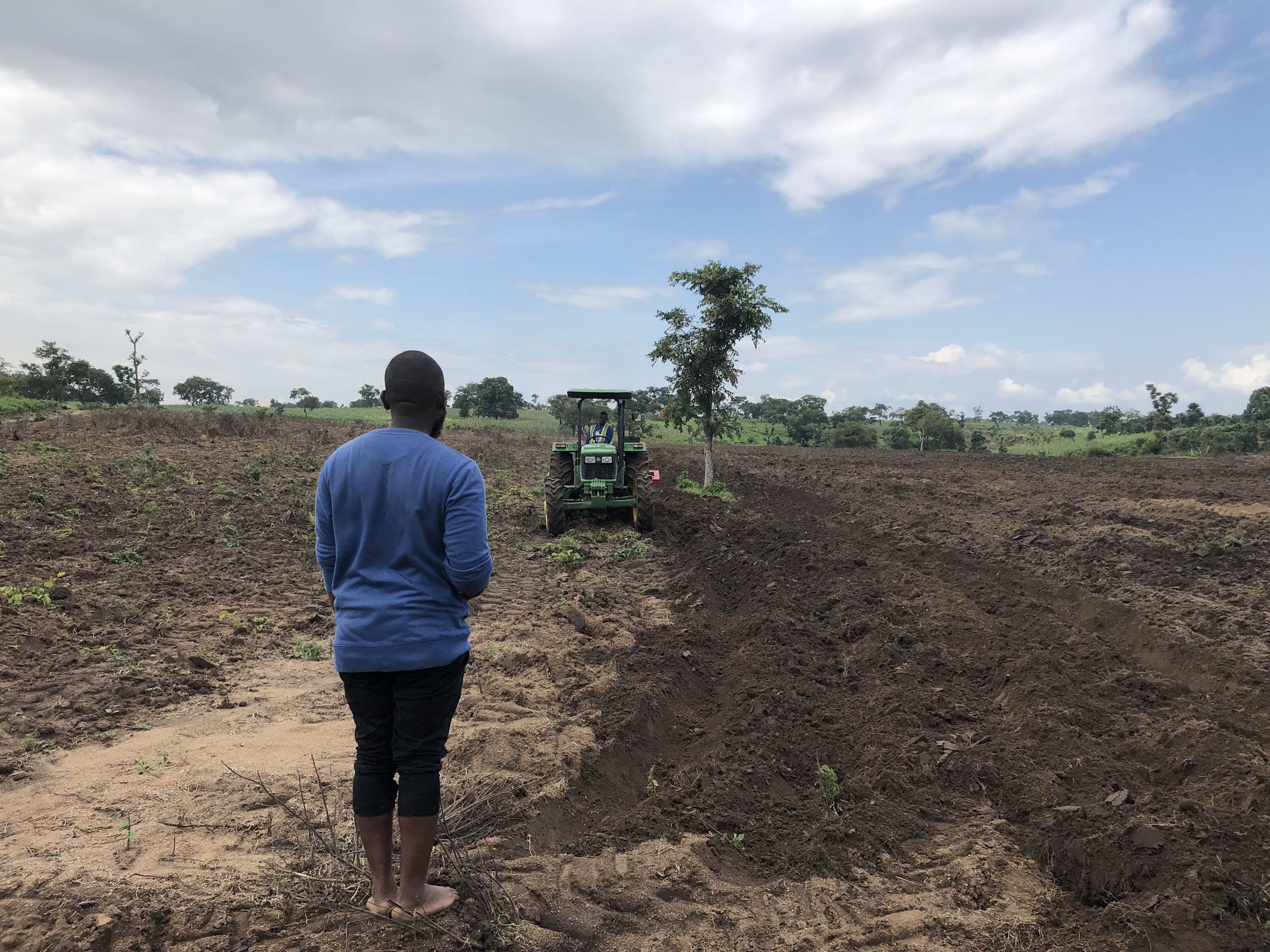
From my hometown of Tegbi, through much of poverty-stricken Africa and the Third World at large, we don’t have a learning problem. What has held, and still holds us back, is a leakage problem. Many AI-for-development activists have experienced firsthand this problem: great ideas for solving persistent problems appear very clear in AI chats, and then vanish into the ether. Just like the Emperor lamented to Maximus about a “dream that was Rome” in the movie, Gladiator. “You could only whisper it. Anything more than a whisper and it would vanish….” In our era, great dreams — ideas like poverty eradication in Africa — often vanish in the midst of talks about the next issue, the next conference. The time is long past to recognize that the solution isn’t another dashboard; it’s an ensemble of a large number of small AI-enabled loops kept running every day: Ask → Act → Capture → Reuse, somewhat like the ‘motors of sustainable innovation’ model proposed by Suurs. Run those loops, and soon, my friends, soon your capacities as agents of AI-enabled change start compounding instead of evaporating.
- Ask — Start with a real task: “Quote a buyer,” “Resize the cover,” “Extract a policy clause.”
- Act — Co-work with an AI to produce an artifact (quote line, image, excerpt). Humans decide trade-offs; AI provides speed.
- Capture — Save the useful bits immediately: the winning prompt, the formula, the receipt line. Label where it lives so Future-You can find it in seconds.
- Reuse — Next time, start from what worked. Edit, re-run, version. Your “personal textbook” writes itself, one solved problem at a time.
A Learning Flywheel (that actually gets used)
If capture takes willpower, it will fail. Make it faster to save than to skip.
Three 90-second snapshots
1) WhatsApp quote-to-cash (MSME)
A solar crop drying vendor keeps three tiny blocks:
- Quote: “Item GHS ___ + delivery GHS ___ = Total GHS ___. If ok, reply YES[total].”
- Payment: MoMo details + reference ID.
- Receipt: Order ID, date, amount, delivery window.
By Week 2, quotes drop from minutes to seconds, totals stop breaking, and the order log becomes a searchable memory of what actually sold.
2) AISESA Researchers (living literature → draft pages)
Each research question gets a short, threaded note. Every extraction gets a citation stub + one line of interpretation. Weekly, those stubs flow into a “findings ledger” mapped to the thesis outline. Result: the manuscript/action plan grows paragraph by paragraph—because writing is now a by-product of reading.
3) Public-sector delivery (from fixes to playbooks)
Recurring problems (missed appointments, stock-outs) are logged as micro-cases with a countermeasure and a one-week follow-up. Every Friday, the wins graduate into a playbook card (trigger → action → artifact → metric). In six weeks, the unit owns a living manual—searchable, teachable, auditable—rather than a heroic inbox.
The 4Cs of compounding knowledge
- Capture (make it automatic). Pre-labeled snippets and mini-templates beat good intentions.
- Context (attach notes to the work). A quote block belongs in the order log; a literature note lives with the question it answers. Context turns “Where did I put that?” into one click.
- Compounding (version, don’t overwrite). Retire “final_final_v3.docx.” Use small, dated increments. Improvement becomes visible—and fundable.
- Collaboration (human judgment + AI speed). Let AI propose ten drafts; humans pick the one that fits values and constraints.
Tools: the “boring answer” that works
The most adoptable stack is usually what people already have on their phone: Sheets + lightweight prompts + WhatsApp. No grand platform migration, no six-month rollout. The secret isn’t the tool; it’s baking Ask → Act → Capture → Reuse into the tools you already touch daily.
IMHO, if you can only do one thing this quarter, make capture one-click. Everything else gets easier.
Teaser: The AI Learner’s Journal App
We’ve been shaping a quiet prototype that turns everyday chats and working sessions into structured, searchable learning assets—automatically. Think of it as a personal textbook that updates itself as you work. It’s in stealth for now; more soon…
Policy & practice: fund adoption infrastructure, not just models
If you care about AI for Sustainable Development, invest in what makes learning accumulate: journals, reusable templates, shared categories, bulk export; works smoothly with Google Sheets and Docs.
Evaluate teams on usage and growth of reusable assets, not on immaculate pilots that never get adopted.
Start this week, measure next month
Pick one workflow. Add two tiny templates. Save one winning prompt. By next month, your team will have a visible trail of solved problems—and training material you didn’t have to “create,” just capture.
Ready to run the AI-enabled loop? Ask → Act → Capture → Reuse. Then do it again.
Transparency note: This piece was crafted human-in-the-loop with help from ChatGPT-5, Claude Code, Perplexity, and a dash of Linux command-line seasoning. Final judgment, edits, and responsibility remain fully human.