Editor’s note (updated October 4, 2025): Based on additional information about TinyWorlds, I have adopted terminology better aligned to the vision of this blog post – ‘TinyWorlds Africa’ (TWA). The basic function has not changed. TWA is a policy engine (system dynamics + agent-based decision support). It is not a 3D interactive/vision engine. Not yet. The core arguments in the original post remain unchanged; the original emphasis on framing and governance is actually clearer.
Part A: Resilience, Productive Use, and the Call for Scrutiny
The reality check: Africa’s transition is about survival and prosperity
Africa’s energy transition isn’t a think-tank seminar—it’s today’s to-do list, to be completed before 2063. Why? Because more than 600 million people still lack electricity, and the goal is to close that gap while building resilient, low-carbon systems that won’t crumble under heat, dust, supply-chain delays, or weak grids. Models designed solely to optimize for decarbonization (common in the Global North) often overlook Africa’s priorities: jobs, incomes, reliability, and local infrastructure constraints. This is a key issue that emerged from a recent AISESA workshop in Saly, Senegal.
That difference in priorities matters. When a mini-grid inverter fails during harvest week, the loss isn’t just technical downtime; it’s also financial. We’re talking of spoiled tomatoes, missed market days, and an affordable real estate developer who can’t service debt. We need tools that capture the whole picture: physics on the asset side and human behavior on the demand side.
TinyWorlds Africa, in plain Language
TWA is envisioned as a policy world model. This decision support engine simulates how Africa’s energy systems and institutions evolve over months and years, rather than a 3D game engine that renders collisions in milliseconds. Think cashflows, licensing, grid timing, adoption, reliability—not character animation. (If you need collisions, you want a Genie-style interactive/vision model; if you need cashflows and coordination, you want this.)
Our most challenging questions involve timing and behavior under uncertainty: should we license mini-grids now or wait for the grid? Should we convert assets when the grid arrives or compensate developers? Should we set tariffs that low-income households can actually sustain while stimulating productive use (PUE)? TinyWorlds Africa helps compare such policy packages as dynamic pathways, showing plausible ranges for jobs, equity, stranded value, reliability, and public revenue—with verification plans attached
Two moving parts, one sentence each.
- Dynamics model: a system-dynamics backbone that tracks how key stocks and flows change over time (demand, capex/opex, outages, battery aging, logistics delays, environmental stress).
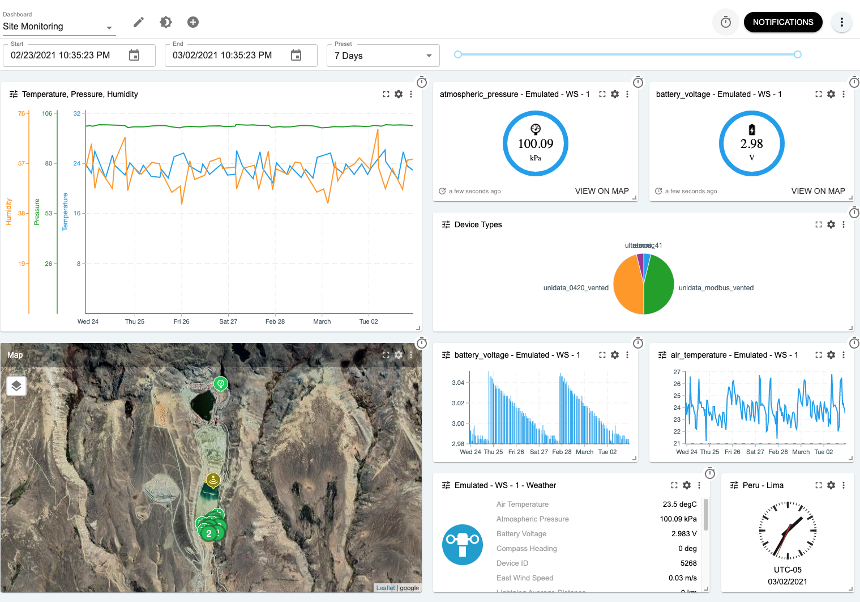
- Action tokenizer: an agent-based decision layer that turns stakeholder choices (ministries, utilities, developers, households) into machine-readable actions with simple behavioral rules (risk, time costs, norms), so the model can simulate who does what next.
What does the New Model Offer in Today’s Africa?
Even when historical data are scarce, TWA can encode local priors (e.g., income seasonality, refill frictions, and rainy-season access penalties) and run scenario stress tests, including early versus late grid arrival, hybrid conversion standards, a grid-arrival compensation fund (GACF), and tariff and PUE bundles. Outputs are ranges, not prophecies—and every recommendation carries an uncertainty budget and stop-loss rule so we can pause or redesign before harm scales.
Stage of Development
The TWA project is currently a research-stage toolkit, not a productized API. The near-term value is twofold: (1) clear comparisons of policy options under uncertainty, and (2) governance by design—Model Cards++, logging, pilot instrumentation, and independent challenge. The examples presented in this article focus on two policy task domains: keeping assets healthy (maintenance, spares, workforce pipelines) and accelerating productive use (appliance finance, tariff design, MSME growth)—because that’s where better decisions today compound into resilience tomorrow.
In the following sections, I briefly describe how TWA can encode local priors (e.g., income seasonality, refill frictions, rainy-season access penalties) as well as scenario stress tests: early vs late grid arrival; hybrid conversion standards; a grid-arrival compensation fund (GACF); tariff + PUE bundles. Outputs are ranges, not prophecies—and every recommendation will carry an uncertainty budget and stop-loss rule so we can pause or redesign before some unforeseen harm scales.
AI Tools Whose Time Has Come
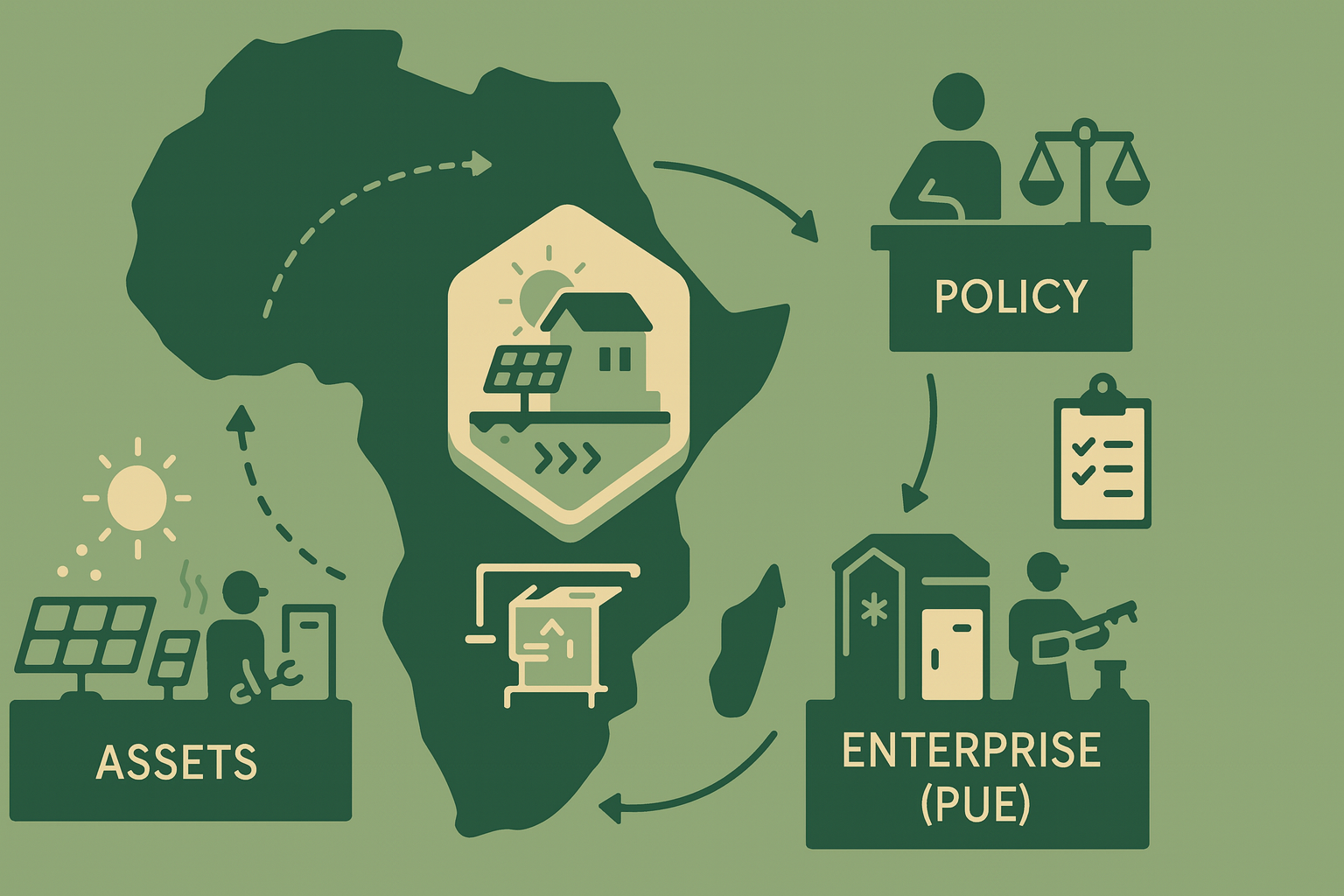
TinyWorlds Africa is being engineered to address present-day needs and be future-ready. While today’s modeling ecosystem excels at site selection, optimization, and asset telemetry, TinyWorlds Africa targets the missing middle: policy coordination and community adoption. Its modular architecture allows us to add capability packs, including licensing & SLAs, hybrid conversion & compensation, PUE finance, technician pipeline planning, and adoption modeling. We don’t replace VIDA/HOMER/enee.io/LEAP; we ingest their outputs, simulate multi-actor pathways under uncertainty, and return auditable, reversible policy choices.
Resilience (Policy Task): How to keep the assets alive and efficient?
Decentralized renewable energy (DRE) assets—mini-grids, SHS fleets, cold rooms—live outdoors. Heat, dust, humidity, and distance are relentless. Traditional planning tools only give you average failure rates.
How it helps in practice
- Compresses the physics into tokens. Converts sensor streams (such as panel temperature, irradiance, and output voltage) into compact representations that the model can learn from.
- Simulates deterioration under local conditions. Helps answer the question: “What happens to performance if dust accumulation rises 20% in the dry season?”
- Tests actions instantly. Logged work order, “Dispatch a technician next Tuesday.” → The model updates expected efficiency and lifespan. Input, “Add scheduled panel cleaning every 30 days.” → The model estimates how much output you recover and how O&M costs shift.
- Quantifies investment risk. Instead of hand-waving about maintenance, the model reveals localized deterioration curves and ROI deltas tied to concrete actions.
Mini-example:
- Problem: A 100 kW mini-grid exhibits a midday efficiency dip during Harmattan dust events.
- Action: TWA runs a simulation and offers the recommendation: “clean panels every 2 weeks for 3 months + add shade over inverters.”
- Result: The model projects a recoverable output gain big enough to offset added O&M within the quarter and extend inverter life by several months.
- Human Decision: Fund the cleaning schedule now; bundle shade retrofit with the next financing tranche.
Why this matters: DRE projects become investable when you can tie maintenance decisions to quantified performance gains. No more toothless bull slogans!
Productive Use of Electricity (Policy Task): How to Expand MSME Access to Clean(er) Energy?
Let me tell you an inconvenient truth: mini-grids don’t survive on household bulbs and phone charging alone. Viability comes from Productive Use of Electricity (PUE)—those that bring in income: grain milling, cold storage, welding, light manufacturing, and agro-processing. These drive the load factor up (sound energy spread across the day and seasons), which pushes the Levelized Cost of Energy (LCOE) down.
Plain definitions:
- PUE: Using electricity for income-generating activity (not just lighting).
- LCOE: The average lifetime price per kilowatt-hour is calculated by adding up all costs and dividing by the total energy produced.
So what might a TWA-assisted policy do?
- Pair supply with enterprise development. Don’t just electrify—co-design with MSMEs. Anchor customers matter.
- Target year-round loads. Cold chains, milling, or ice-making that continue to operate even when households reduce their usage.
- Bundle finance. Support appliances and working capital; a mill without affordable grain or a cold room without inventory is a box of promises.
- Measure what matters. Track load factor, not just connections. Reward operators for stable, productive demand.
Bottom line: Reliable power stabilizes local businesses, which in turn consume more power, ultimately stabilizing the operator’s revenues. That flywheel is the whole game.
But Wait! Can We Trust TinyWorlds All the Time?! (Policy Task: Run It Through a TRUST Matrix)
Powerful models can mislead confident people. To avoid that trap, I propose using a simple governance lens: a TRUST Matrix with two axes—Stakes/Risk and Verifiability.
For TinyWorlds and similar world-model approaches, the placement is ruthless:
- High Stakes: We’re making multi-million-dollar infrastructure choices and community welfare (reliability, food security, health). A wrong call has real-world consequences.
- Hard to Verify: The dynamics model can produce emergent behavior and infer latent actions from sparse data. Even experts struggle to audit every internal step.
Therefore: Treat Tiny Worlds as a scenario generator, not an oracle. It’s a power tool for structured collective human imagination. Competent leader(s) still sign the policy.
A quick, responsible-use checklist
- Data hygiene: Document sources; label synthetic vs. observed; track assumptions.
- Local validation: Convene technicians, operators, and community reps to sanity-check outputs.
- Red-team the model: Actively look for failure cases (edge weather, unusual demand, missing spare parts).
- Decision thresholds: Pre-define what evidence triggers action vs. more study.
- Human-in-the-loop: Final decisions require domain experts—and minutes that record dissent.
If this seems conservative, congrats. In high-stakes, low-data environments, prudence is a feature.
Final Thoughts & What’s next
World models can help Africa plan for the people, by simulating, for instance, solar asset deterioration under dusty peri-urban conditions, maintenance, logistics, and the business realities of PUE. In every case, be sure to make the AI governance stance clear: use TinyWorlds and similar AI to explore possibilities; validate locally before you bet the future of the village.
Up next (Part B): We’ll explore how AI-assisted policy — in the form of an enhanced TinyWorld Africa platform — can help accelerate adoption of clean cooking solutions, a behavioral challenge where “rational” economics often loses to tradition, taste, and time.
Glossary (short and friendly)
- World model: A learning-based simulator that predicts the “next state” of an environment given what’s happening now and what actions are taken.
- Dynamics model: The part of a world model that captures how the environment evolves (e.g., heat → faster battery aging).
- Action tokenizer: A method to encode human or system actions (“dispatch tech”, “delay milling”) so the model can simulate consequences—even with sparse historical logs.
- PUE (Productive Use of Electricity): Income-generating loads (milling, welding, cold storage).
- LCOE (Levelized Cost of Energy): Lifetime cost per kWh.
TRUST Matrix: A simple governance lens—map a task by Stakes/Risk and Verifiability to decide how much human oversight you need.